
Living with gut flare-ups
7 Things Your Gut Could Be Quietly Wrecking (that have nothing to do with your stomach)
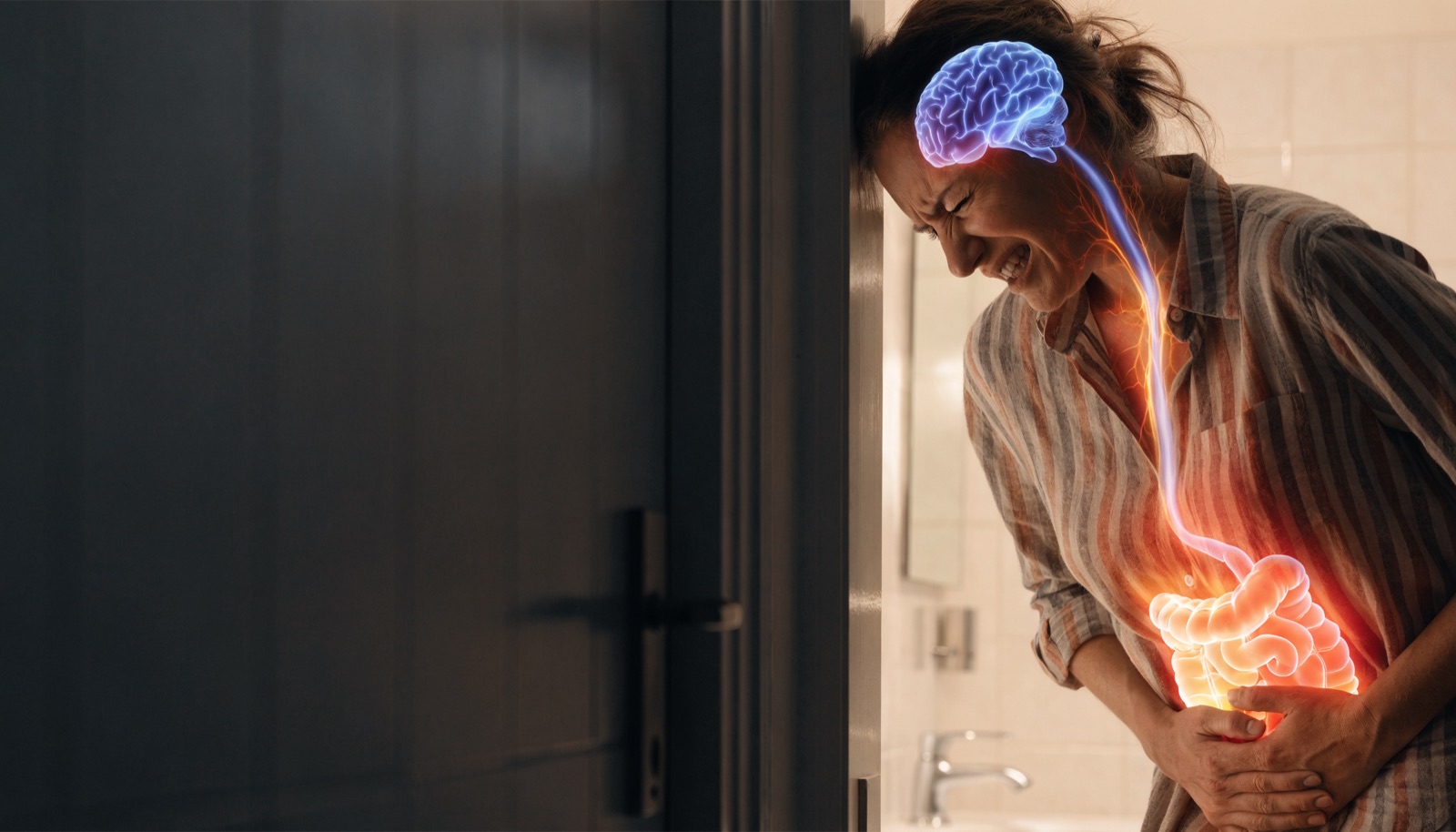
You know the routine. You go in with real symptoms — the bloating, the cramps, the days your stomach decides your schedule — and you walk out with a shrug and a leaflet. “Probably stress. Probably IBS. Try more fiber.”
Why this matters more after 40
In your teens, a rough gut is annoying. After 40, it’s different — your hormones are shifting, your body’s changing, and “just live with it” stops being an option. Persistent gut issues at this age deserve real answers, not another shrug. Because here’s what your gut could be quietly wrecking while everyone keeps calling it a stomach problem:
Your anxiety and low mood
Up to ~90% of your body’s serotonin — the chemical that steadies your mood — is made in your gut, not your head.* When your gut is inflamed, your mood takes the hit — and everyone keeps telling you it’s “just in your head.” They’re not even pointing at the right organ.
Where your serotonin is made
Tap or hover the bars. Approximate share — see source below.
The exhaustion no coffee fixes
A gut that isn’t absorbing properly can quietly drain your energy, day after day — and at this age, it gets blamed on “getting older.” It might not be your age. It might be where your breakfast is (or isn’t) going.
Achy joints and flaring skin
Gut inflammation doesn’t stay in your gut. It’s linked to joint pain and skin flare-ups that seem totally unrelated — which is exactly why nobody connects them in an 8-minute visit.
Deficiencies no one checked for
Iron, B12, vitamin D — if your gut isn’t absorbing, you can run low without knowing it. That means fatigue, hair thinning, and brain fog that gets waved off as stress. In studies of people with chronic gut conditions, running low is closer to the rule than the exception:**
How often studies find people with chronic gut conditions running low
Reported ranges vary by study and condition — sources below.
Something treatable, hiding under “just IBS”
Persistent symptoms can mask celiac, IBD, or SIBO — real, findable things a vague label skips right over. “Just IBS” should be the end of a careful process, not the start of a shrug.
A cycle that makes everything worse
Gut symptoms often spike with your hormones — and after 40, that interplay gets louder, not quieter. If your flare-ups follow your cycle, that’s not a coincidence. That’s a pattern worth catching.
A life that keeps getting smaller
The cancelled plans. The bathroom-mapping every restaurant and road trip. The “I’m fine.” That’s not nothing. That’s your gut running your calendar — and it’s the one symptom no lab test will ever show.
So why has nobody put this together?
Here’s the problem: no single doctor’s visit sees all of this at once. The GP sees the fatigue. The dermatologist sees the skin. The leaflet says fiber. You’ve been handed one puzzle piece at a time — and nobody’s holding the box.
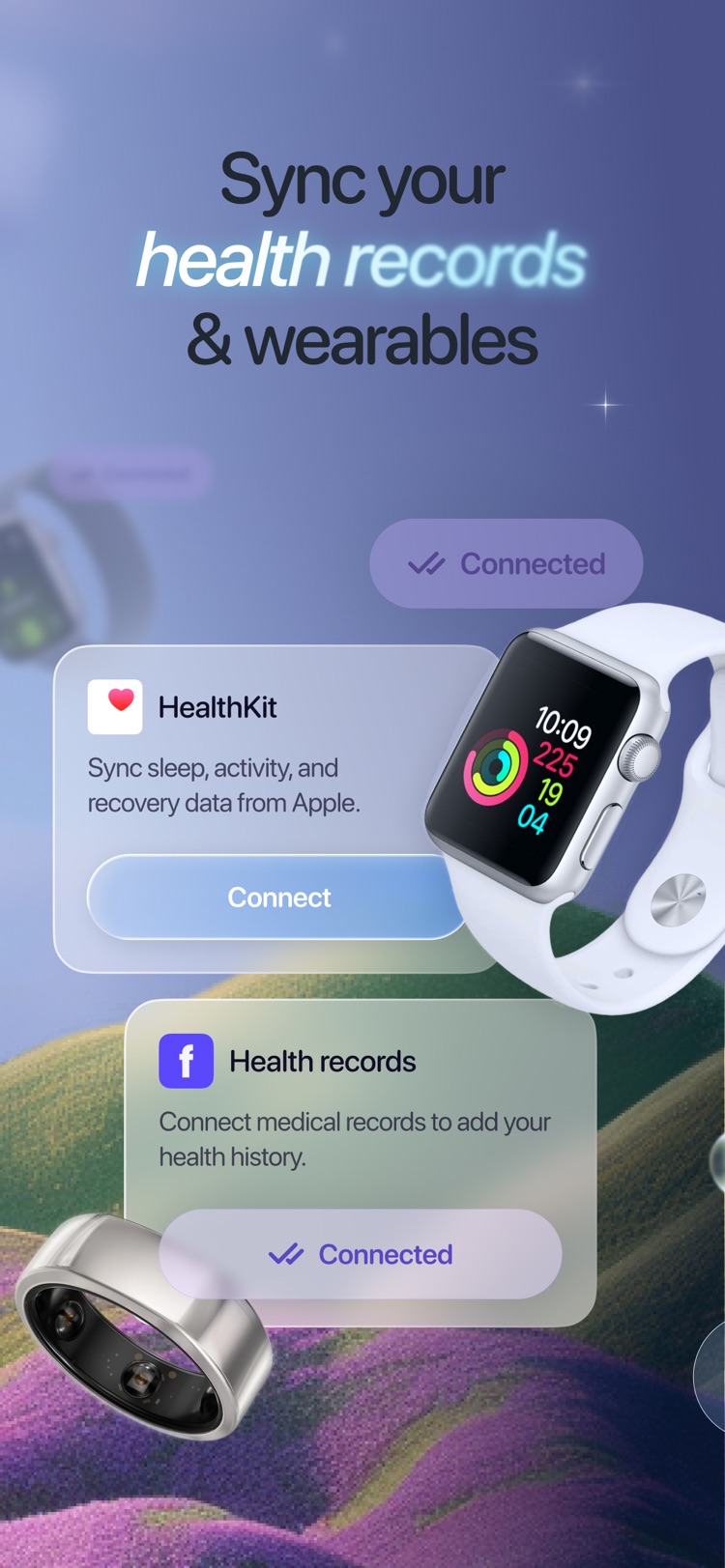
Coco is an AI health companion that quietly tracks everything — food, sleep, stress, your cycle, your symptoms — and connects the dots to find your pattern. So instead of a shrug, you finally walk into that appointment with proof: a clear timeline of what’s actually going on. You don’t need an expensive appointment to start. You can start today, free.
You’re not overreacting. Your gut isn’t “just sensitive.” You just deserve someone who’s actually paying attention.
Coco is a wellness and tracking tool, not a medical device, and does not diagnose or treat any condition. Always consult your doctor about persistent symptoms.
This page was published by Coco Health.
* The great majority of the body’s serotonin is produced in the gut: Yano et al., Cell (2015).
** Vitamin D deficiency reported in up to ~70% of people with IBD: Fletcher et al., Nutrients (2019). Iron deficiency reported in up to ~45%: Gisbert & Gomollón, Am J Gastroenterol (2008). B12 deficiency reported in up to ~20% of Crohn’s patients: Battat et al., Inflamm Bowel Dis (2014).